


Later never comes.
The problem isn't that these reports lack data. They have *too much* of it. Metrics, graphs, and dashboards that look impressive but answer none of the questions that actually matter. (This is exactly why we focus on building dashboards designed for decisions, not decoration.)
What's Wrong With Most Marketing Reports
Most marketing reports fail for three reasons:
1. They're data dumps, not insights. Raw numbers without context or analysis don't help anyone make better decisions.
2. They focus on vanity metrics. Impressions, followers, and page views look good but rarely connect to revenue.
3. They don't answer "so what?" A report that doesn't tell you what to do next is just an expensive history lesson.
Let's break down each problem—and what to do instead.
The Vanity Metrics Trap
Some metrics feel important but mean almost nothing for your business. Here are the biggest offenders:
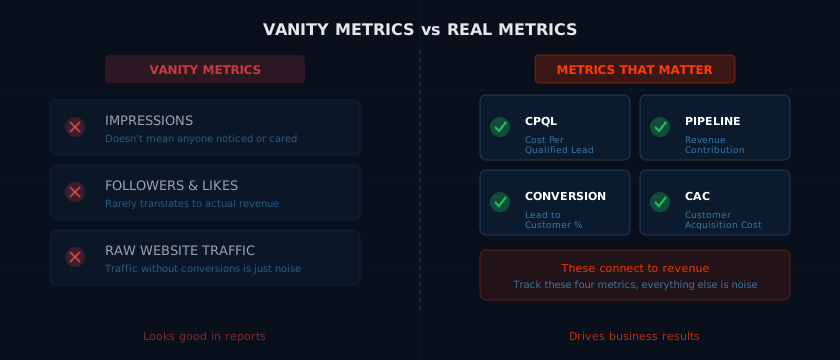
Impressions
Impressions tell you how many times your ad appeared. They don't tell you if anyone noticed, cared, or remembered your brand five minutes later.
A million impressions with zero conversions is just expensive wallpaper.
Followers and Likes
Social engagement rarely translates to revenue. We've seen accounts with 50,000 followers generate fewer leads than accounts with 2,000 engaged followers in the right niche.
Vanity metrics are called vanity metrics for a reason.
Raw Website Traffic
Traffic sounds great in a report. But traffic without conversions is just people bouncing off your site.
It's noise, not signal.
> The uncomfortable truth: These metrics often go up while business results stay flat. We've watched companies celebrate record engagement while their pipeline dried up. This is why data-driven marketing starts with asking what decisions you're actually trying to make.
The Three Questions Every Report Should Answer
A useful marketing report answers three questions in plain English:
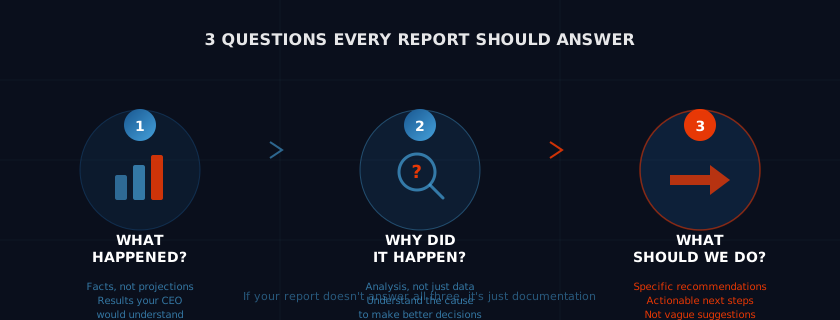
Question 1: What Actually Happened?
Not what could have happened. Not projections. What happened this month, in terms your CEO would understand.
Compare these two statements:
- ❌ "Organic traffic increased 23%" - ✅ "We generated 47 qualified leads from organic search"
The first is a vanity metric dressed up in professional language. The second connects marketing to business outcomes.
Question 2: Why Did It Happen?
This is where most reports fail completely. They show what changed but never explain why.
When leads drop 30%, you need to know:
- Was it a seasonal dip? - Did a campaign stop working? - Is a competitor eating your lunch?
We spend more time on the "why" than the "what" in every report. Understanding why is the only way to make better decisions. Tools like session recordings and heatmaps can reveal what the numbers alone can't tell you.
Question 3: What Should We Do Next?
Every report should end with specific recommendations. Not vague suggestions like "continue optimizing campaigns."
Real recommendations look like this:
- "Pause the LinkedIn campaign and shift budget to Google Ads, where cost per lead is 40% lower" - "The pricing blog post generated 3x more leads than product features—create more pricing content" - "Email open rates dropped when we increased frequency—test bi-weekly sends instead"
If your report doesn't tell you what to do differently, it's just documentation.
The Four Metrics That Actually Matter
After years of creating reports for B2B companies, we've found that most businesses need to track just four things closely.
Everything else is supporting detail.
1. Cost Per Qualified Lead (CPQL)
Not cost per click. Not cost per lead. Cost per *qualified* lead—the ones your sales team actually wants to talk to.
This metric exposes the difference between marketing that looks busy and marketing that works.
Why it matters: We've seen campaigns with terrible click-through rates generate the best leads, and vice versa. Optimize for qualified leads, not volume.
2. Pipeline Contribution
How much potential revenue did marketing create this month?
This connects marketing to the number everyone in the C-suite cares about: revenue.
Why it matters: When you can show that marketing sourced $500K in pipeline last quarter, budget conversations get a lot easier.
3. Lead-to-Customer Conversion Rate
What percentage of marketing leads eventually become customers?
This tells you whether you're attracting the right people. (Understanding why visitors convert—or don't—is exactly what conversion rate optimization uncovers.)
Why it matters: A high conversion rate means marketing and sales are aligned. A low rate means you're generating leads that don't fit.
4. Customer Acquisition Cost (CAC)
The *full* cost to acquire a customer—ad spend, agency fees, sales time, and tools.
This is the reality check.
Why it matters: Some channels look efficient on a cost-per-lead basis but become expensive when you factor in the full acquisition cost.
A Report Structure That Actually Gets Read
The best marketing report we've ever seen was three pages long. It covered everything the executive team needed in ten minutes.
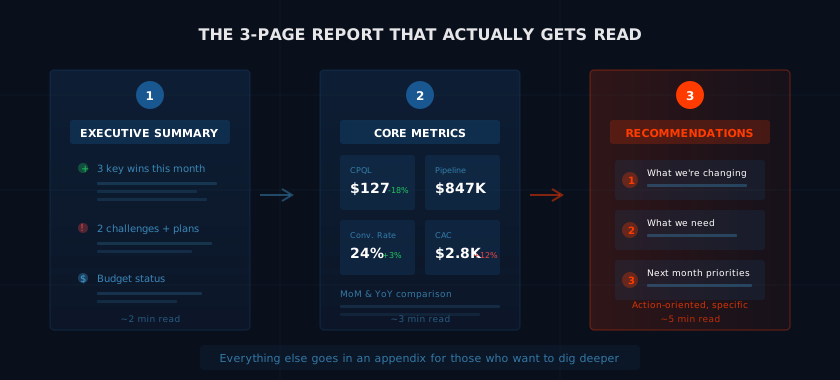
Here's the structure:
Page 1: Executive Summary
- Three key wins this month - Two challenges and what we're doing about them - Budget status and forecast
Page 2: Core Metrics
- The four metrics that matter - Month-over-month and year-over-year comparison - Brief analysis of trends
Page 3: Recommendations
- What we're changing based on the data - What we need from leadership - Next month's priorities
Everything else goes in an appendix for people who want to dig deeper.
The Honesty Test
Here's something most agencies won't tell you: good reports include bad news.
If every metric in your report is green, either you've cracked the code on marketing, or someone is hiding problems in the data.
We include failures in every report we create. Not because we like admitting mistakes—but because failures teach you more than successes.
When a campaign flops, the "why" becomes obvious. When a campaign works, you're often guessing at the reasons.
Radical transparency in reporting builds trust. And it helps you fix problems before they become expensive.
Five Questions to Evaluate Your Reports
If you're assessing your current marketing reports, ask:
- Can I explain our marketing performance to my CEO in two sentences? If not, the report isn't doing its job.
- Does the report tell me what to do next? Data without recommendations is just noise.
- Are we tracking leading or lagging indicators? Traffic and engagement are leading. Revenue and pipeline are lagging. You need both, but lagging matters more.
- When did we last change something based on report findings? If reports don't drive decisions, why create them?
- Does my team actually read these reports? If no, you're wasting everyone's time.
Key Takeaways
Marketing reports should make you smarter about your business, not just document what happened.
Here's what to remember:
- Focus on four core metrics: CPQL, pipeline contribution, conversion rate, and CAC - Every report should answer: What happened? Why? What's next? - Three pages is enough—put details in an appendix - Include bad news—transparency builds trust - If reports don't change behavior, they're not working
The fix isn't more data or fancier dashboards. It's fewer metrics, better analysis, and honest assessment of what's working.
The best marketing report is one that changes how you market.
*See how we applied these principles to help GarGeon achieve 98x ROAS by focusing on the metrics that actually drive revenue.*
*Want to see what a useful marketing report looks like? We're happy to share examples from our work with B2B companies. Get in touch and let's talk about what reporting should look like for your business.*
Next step
Run this on your own account.
The 14-day audit puts a number to every claim in this piece — applied to your numbers, written in plain English. Free, yours to keep.